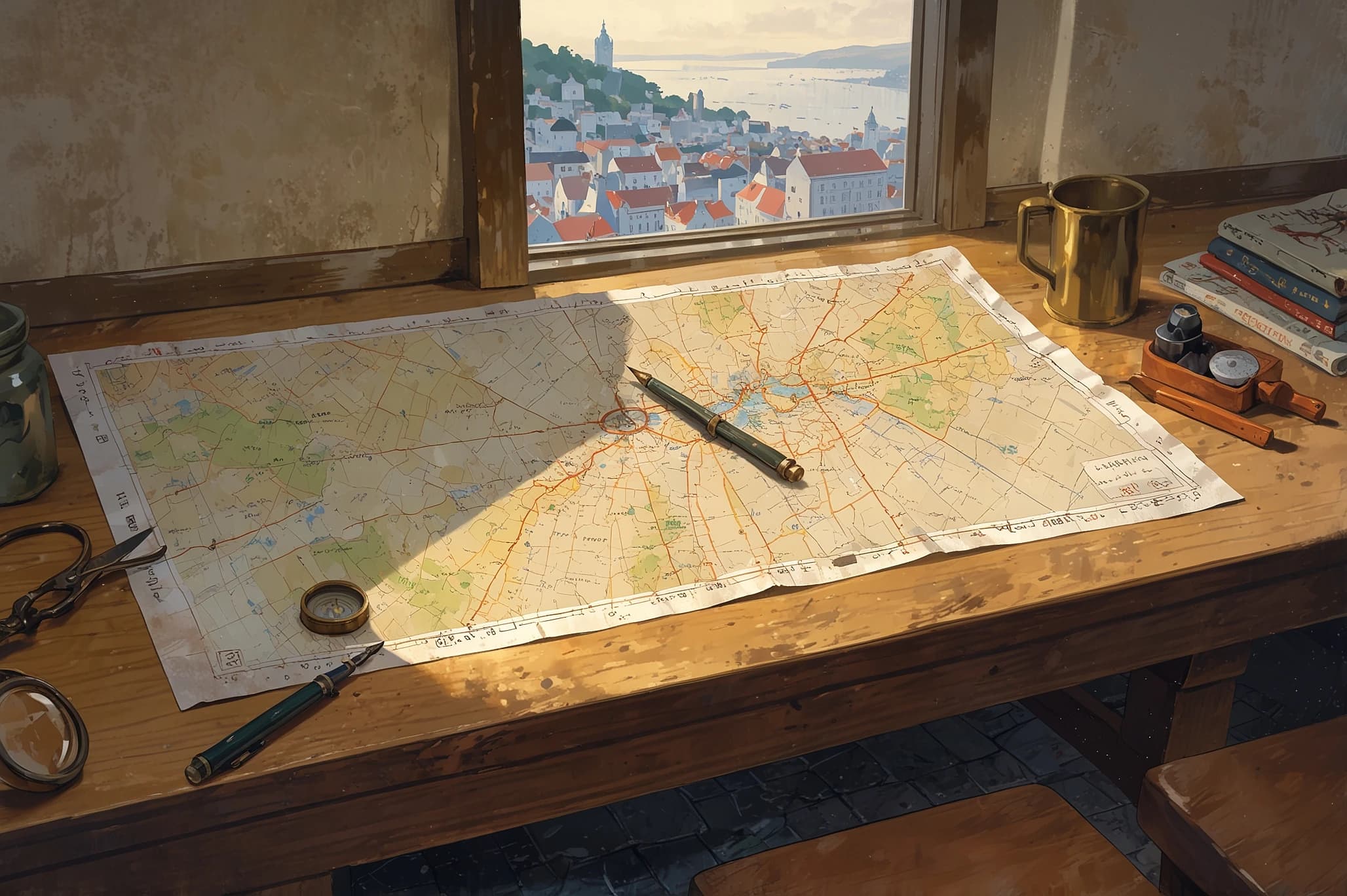
Description
Spring 1884. A packet from the Quelimane coast reaches a cramped Rua do Alecrim atelier: a hand-drawn valley, a line in a private engraving hand, a note too short to be safe, a compass that refuses north. The surveyor who signed the packet has been seven months in Portuguese Zambezia; he is now officially missing. The person who can read the notches in the margin—engraver's child, or anyone else who learned the same tricks—sees a route that is not a route but a sequence of events to trigger or to stop. A Ministry second lieutenant boards the same steamer with sealed orders, a name on a survey he was told to protect, and the dawning, unwelcome match between that hand and the hand that forged a boundary the Ministry still sells as natural. The symbols describe an administrative lie big enough to license worse violence. To undo it means walking inland in company that may not be allied, trusting locals the Lisbon plates erased, and deciding whether a father's map is a gift or a bill. No one in the party has only one map to follow.